
The Minerals of the Future Reshaping Global Industry
FORTALEZA – In the era of artificial intelligence, energy transition, and high-precision electronics, the wealth of nations is no longer measured solely by their traditional oil or gold reserves. The new axis of business geopolitics and global technological sovereignty rests upon a special class of mineral resources: Rare Earth Elements, Critical Minerals, and Strategic Minerals.
Although frequently conflated, these terms possess distinct concepts and market applications. For investors, industries, and decision-makers integrated into the CTN Hub ecosystem, understanding this taxonomy is fundamental to mapping capital flows and global supply chains. Below, we break down each of these categories and dissect, one by one, the 17 elements that comprise the coveted rare earths.
1. What Are Rare Earth Elements? (The 17 Fundamental Elements)
Contrary to what the name suggests, Rare Earth Elements (REEs) are not necessarily scarce in the Earth’s crust. The term “rare” stems from the fact that they are typically found in low concentrations and deeply intermixed with other minerals, making the chemical processes of separation, extraction, and refining extremely complex, capital-intensive, and environmentally taxing.
Chemically, the group consists of the 15 elements of the lanthanide series, plus scandium and yttrium, which exhibit similar physical and chemical properties. Below, we outline the application and market importance of each of the 17 elements:
The Light Rare Earth Elements (LREE) Group
- Lanthanum ($La$): Fundamental in manufacturing high-refractive index lenses for cameras and telescopes, petroleum refining catalysts, and rechargeable battery components (especially for hybrid vehicles).
- Cerium ($Ce$): The most abundant element of the group. It is widely utilized as a polishing agent for glass and liquid crystal displays (LCDs), as well as a fuel additive and automotive catalytic converter component to minimize pollutant emissions.
- Praseodymium ($Pr$): Essential for developing high-strength metal alloys used in aviation engines. It is also combined with neodymium to create the permanent supermagnets that power electric vehicle motors and wind generators.
- Neodymium ($Nd$): The most commercially traded mineral of the group. It is the crucial raw material for manufacturing neodymium permanent magnets (NdFeB), the most powerful magnets in the world, utilized in wind turbines, computer hard drives, audio speakers, and electric vehicle drivetrains.
- Promethium ($Pm$): A strictly radioactive and extremely rare element, generated almost exclusively synthetically. It is utilized in scientific research, thickness gauges, and as a thermal source in nuclear micro-batteries for deep-space exploration.
- Samarium ($Sm$): Utilized in manufacturing samarium-cobalt magnets, which exhibit exceptional resistance to extreme temperatures (exceeding 300°C). These are vital for the defense industry, missile guidance systems, and high-power microwave applications.
The Heavy Rare Earth Elements (HREE) Group
- Europium ($Eu$): Highly valued for its phosphorescent properties. It is the element responsible for generating the bright red color in smartphone screens, televisions, and high-efficiency LED lamps, and is also embedded in security filaments to prevent counterfeit banknotes.
- Gadolinium ($Gd$): Features unique magnetic properties that make it indispensable in medicine, serving as a contrast agent in Magnetic Resonance Imaging (MRI) scans. It is also applied in nuclear reactors and eco-friendly magnetic refrigeration systems.
- Terbium ($Tb$): Utilized to produce the green color in electronic displays. When added to neodymium magnets, it drastically increases their thermal stability and resistance to demagnetization under high temperatures, which is crucial for high-performance motors.
- Dysprosium ($Dy$): Much like terbium, dysprosium acts as an irreplaceable thermal stabilizer for electric vehicle supermagnets. Without it, electric motors would lose magnetic strength due to the heat generated by friction and continuous operation.
- Holmium ($Ho$): Possesses the highest magnetic strength of any known chemical element. It is employed in creating magnetic poles for specialized scientific equipment and in medicine to calibrate high-precision medical lasers used in ophthalmic and urological surgeries.
- Erbium ($Er$): The backbone of the global internet. Erbium is utilized as a signal amplifier in transoceanic fiber-optic cables. It allows data to travel thousands of kilometers under the ocean without losing signal intensity or transmission speed.
- Thulium ($Tm$): One of the most expensive and scarce elements. Due to its capability to emit controlled radiation, it is used as a radiation source in portable X-ray devices for medical and dental use in remote regions.
- Ytterbium ($Yb$): Utilized in ultra-precise atomic clocks, industrial stress sensors (to monitor structural deformation in engineering infrastructure), and high-power fiber-optic lasers for industrial metal cutting.
- Lutetium ($Lu$): The final and densest element of the lanthanide series. It is applied in nuclear medicine, specifically in positron emission tomography (PET-Scan) crystals for early tumor detection, and as a catalyst in petroleum refineries.
Associated Transition Elements
- Scandium ($Sc$): Used in manufacturing ultra-high-strength, lightweight aluminum-scandium alloys employed in military fighter jet fuselages, aerospace components, and high-performance sports equipment (such as competitive bicycle frames).
- Yttrium ($Y$): Widely utilized in alloys to increase corrosion resistance under high temperatures. It is vital in producing advanced ceramics, superconductors, LED phosphors, and innovative cancer radiotherapy treatments.
2. What Are Critical Minerals?
The concept of a Critical Mineral is defined not purely by chemistry, but by economics and geopolitical vulnerability. A mineral is classified as “critical” by a nation or economic bloc when it cumulatively fulfills two main conditions:
- High Economic Importance: It is absolutely essential for the operational continuity of strategic industrial sectors (such as the energy transition or the defense industry).
- High Supply Disruption Risk: Its global supply chain is heavily concentrated within a few producing countries or regions prone to political instability.
Rare Earths themselves are considered critical minerals in Europe and the U.S., given China’s near-monopoly over refining. Other classic examples of critical minerals today include Lithium, Cobalt, Nickel, and Graphite—the vital raw materials for the lithium-ion batteries powering the global electric vehicle fleet.
3. What Are Strategic Minerals?
The definition of a Strategic Mineral carries a specific bias toward the socioeconomic development and national security of an individual country. Each nation maintains its own list of strategic minerals based on its economic goals and state priorities. In Brazil, for instance, the Pro-Strategic Minerals Policy classifies mineral resources under three priority frameworks:
- Trade Balance: Minerals where the country holds a strong export dominance that generates significant trade surpluses (e.g., Iron Ore and Niobium).
- Import Dependency: Minerals essential for internal sovereignty, but which the country must import on a large scale, creating strategic vulnerability. The most glaring example is the minerals used in fertilizer production for agribusiness, such as Potassium and Phosphate.
- The Future of Technology: Minerals essential for the new digital economy and energy transition (where Rare Earths, Uranium for nuclear purposes, and high-purity Quartz for microchips intersect).
Ceará’s Positioning on the Global Chessboard
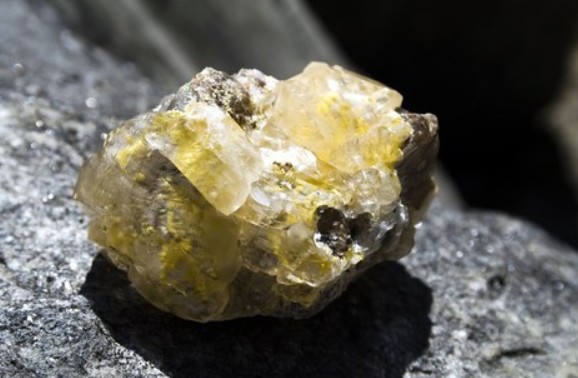
For the CTN Hub ecosystem, mapping this mineral infrastructure demonstrates that Ceará stands at the center of global friendshoring trends (the centralization of supply chains within allied nations). The state features rich mineral provinces and complex structured mining projects—such as phosphate associated with uranium, alongside promising rare earth occurrences in the interior.
Equipped with the cutting-edge infrastructure of the Pecém Complex and a fully consolidated clean energy matrix, Ceará qualifies itself to be not just an exporter of raw commodities, but an industrial link for refining and manufacturing advanced technology for the world’s most demanding corporate markets.
Ceará Global: Good business starts here.
Read also: Rare Earths: The Hidden Treasure of the Semi-Arid – Ceará Today Network