
R$ 5 Billion Investment by Serdan Mineração in Quixeramobim Transforms Ceará’s Economic Profile
FORTALEZA – The macroeconomic landscape of Ceará’s interior is undergoing one of the largest industrial shifts in its history. The confirmation of a US$ 1 billion mega-investment (just over R$ 5 billion at the current exchange rate) for the exploration and processing of lithium in the Central Outback permanently positions the state on the global radar of the energy transition.
The multi-billion project is spearheaded by Serdan Mineração, a mining corporation headquartered in Minas Gerais, and will have the municipality of Quixeramobim as its epicentre, expanding its operational branches into the neighboring municipality of Banabuiú. For the CTN Hub business ecosystem, this movement represents far more than the opening of a traditional mining facility; it marks the foundation of a high-tech cluster and integrated logistics network in the heart of the semi-arid region, structured to unify lithium sourcing across the entire Brazilian Northeast.
Who is Serdan Mineração and the Strategic Partnership with Libra Ligas
To comprehend the solidity of the announcement made directly by Sérgio Dantas, founder and owner of the Serdan Group, one must look at the company’s extensive industrial background. Serdan maintains a strong presence in iron ore extraction and established steelmaking sectors, in addition to holding strategic lithium assets in the Jequitinhonha Valley in northeastern Minas Gerais—the region that currently stands as Brazil’s premier benchmark for the metal’s mining.
To accelerate its deployment in Ceará, the Serdan Group will not start from scratch. Negotiations led by Dantas indicate that the corporation is validating assets and leasing mines with a purchase option from Libra Ligas do Brasil S/A. The strategic blueprint consists of utilizing Libra’s existing physical metallurgical infrastructure to install the lithium concentrate processing plant.
Libra Ligas is a highly influential partner:
- Track Record: Founded in 1987 in Banabuiú, it is a traditional brand in the markets of ferrosilicon alloys, manganese ore, and inoculants.
- Scale: It produces approximately 12,000 tons per year, serves 16 countries, and employs 180 people directly.
- Additional Assets: The company owns proprietary iron and quartz mines, along with an industrial plant strategically positioned near the Port of Pecém in the Greater Fortaleza area.
While the initial processing and logistical structure will utilize Libra’s base in Banabuiú, Serdan is in the final stages of agreement regarding the exact extraction zones and the future industrial layout in the region. The commercial objective is highly aggressive: “Lithium exploration will target the entire Northeast, but the headquarters will be in Ceará. Wherever there is lithium in the Northeast, we will go after it,” emphasized Sérgio Dantas.
Multimodal Logistics: From Extraction to the Battery Gigafactory via Transnordestina
The R$ 5 billion investment will be deployed in two clear industrial phases. The first phase will take place at Libra’s former facilities, where ore concentration will be produced. The true competitive differentiator, however, lies in the second stage: the construction of a battery factory.
This factory is expected to be installed near Quixeramobim’s future dry port terminal. The geographical choice is purely strategic and supply-chain focused, aiming to leverage the high-capacity freight infrastructure of the Transnordestina Railroad. Positioning the industrial infrastructure directly adjacent to the rail terminal will drastically reduce transport costs, connecting the extraction area directly to the state’s export ports.
What is Lithium and Ceará’s Untapped Geological Potential
Frequently nicknamed in international markets as “white gold,” lithium is an alkali metal that has become the most critical and disputed element in current technological geopolitics due to its irreplaceable role in high-density batteries utilized in electric vehicles (EVs) and renewable energy storage.
Historically, data from the National Mining Agency (ANM) point out that, alongside Minas Gerais, Ceará holds the largest lithium reserves in the country, concentrated primarily in the Central Outback across two mineral-rich varieties:
- Amblygonite: Found in abundance within the municipality of Solonópole.
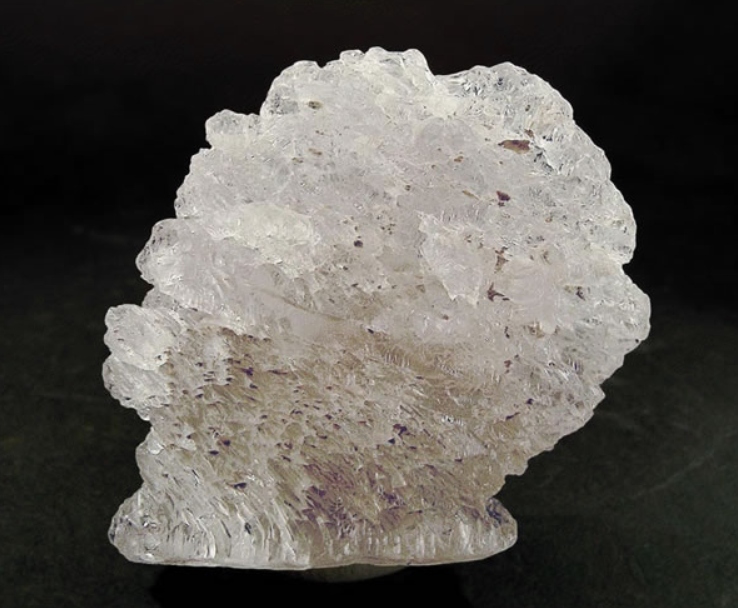
- Lepidolite: A purplish mineral widely present in Quixeramobim, also heavily utilized in the glass, ceramics, and ornamental stone industries.
The Tailings Boom and the Gold Rush at the MME
Ceará holds a unique sustainable competitive advantage: the re-utilization of mining tailings. As one of Brazil’s largest producers of ornamental stones, the state discovered that the waste residues from these rocks contain high lithium content. A practical example of this innovation is Gramazini Mineração, from Massapê, which in September 2025 was authorized by the ANM to utilize rock tailings across a 940-hectare area, currently standing as the only project in Ceará with a definitive “mining concession” for extraction and trade.
This lithium fever has triggered an unprecedented institutional rush toward the Ministry of Mines and Energy (MME). Currently, mineral prospecting applications in the state have surpassed the 700-process mark at the ANM:
- 153 projects are in the “exploration permit request” phase (awaiting formal release).
- 617 projects have already secured formal “exploration authorization” (active field study and drilling phase within delimited blocks).
- 1 project is in the “availability” phase for new incoming bidders.
The momentum is so significant that Quixeramobim’s Secretary of Economic Development, Afrânio Feitosa, confirmed that the municipality is drawing other mining corporations interested in local extraction and processing, whose operations already hold environmental licenses and are progressing into the land-clearing stage. This geological ecosystem is so rich that it is driving parallel investigations, such as industrial diamond exploration surveys in Boa Viagem.
Socioeconomic Impact and Local Supply Chain Opportunities
For Ceará-based B2B suppliers and service providers, Serdan’s project unlocks a multi-billion, long-term procurement market:
- High-Skilled Employment: Beyond thousands of temporary construction and industrial assembly jobs, the permanent operations will generate high-paying positions for mining engineers, chemical engineers, geologists, and automation technicians, retaining high-income professionals in the state’s interior.
- Supply Chain Expansion: There will be a massive demand for local corporate security firms, industrial catering, heavy-duty freight transport, structured chemical input suppliers, and Energytechs specialized in self-generation power models for the Quixeramobim plant.
The Strategic Outlook of the CTN Hub
For CTN Hub (Ceará Today Network) decision-makers, the arrival of Serdan Mineração elevates Ceará’s industrial tier. The state transitions from being a mere exporter of raw commodities to leading the production of high-value technological components (concentrate and batteries). By bridging the lithium of the Central Outback with Pecém’s Green Hydrogen Hub, Ceará definitively secures the two primary pillars of the global decarbonization matrix. The Ceará semi-arid region proves that with robust logistical infrastructure and venture capital attraction, the corporate future walks toward the interior.