
What this structural shift means for doing business in the State.
FORTALEZA – The Pecém Industrial and Port Complex (CIPP), located 60 km from Fortaleza, is rapidly transforming into the largest digital infrastructure construction site in Latin America. Chinese giant ByteDance, the parent company of TikTok, selected Pecém to house its first data center on the continent—a massive project combining infrastructure and IT hardware over the decade that could surpass R$ 200 billion, with R$ 50 billion allocated strictly to the initial deployment. Construction works commenced in January 2026, and the first operational phase is slated for the third quarter of 2027.
However, TikTok is merely the most visible tip of a much broader structural movement. According to the Pecém Industrial and Port Complex authorities, at least nine data center projects have already been approved in the region, totaling approximately R$ 558 billion in announced investments. Fortaleza already hosts 11 operational data centers, positioning the State as the world’s second-largest international connectivity hub, trailing only Fujairah in the United Arab Emirates.
What is at stake, therefore, is not an isolated investment, but the consolidation of Ceará as a vital strategic node for the infrastructure supporting global artificial intelligence, cloud computing, and digital services.
Why Ceará Attracts: The Engineering Behind the Choice
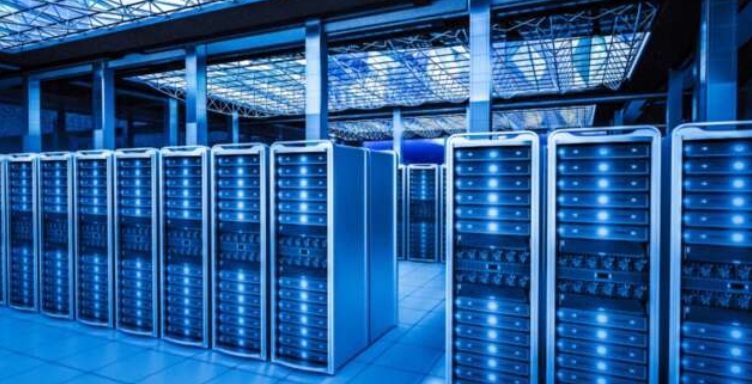
Data centers are never deployed by chance. Location decisions follow a nearly mathematical logic, and Ceará provides a rare combination of structural attributes that few regions worldwide can offer simultaneously:
- Physical Connectivity: Fortaleza concentrates one of the largest clusters of submarine fiber-optic cables on the planet. Out of the 18 international cables connecting Brazil to North America, Europe, and Africa, 16 land at Praia do Futuro in Fortaleza. This extreme proximity to data landing points drastically minimizes latency—the time required for data to travel between servers and users—which is a decisive factor for cloud operations, streaming, and AI training.
- Abundant Clean Energy: Ceará is the leading producer of wind energy in Brazil, benefiting from constant trade winds along its coastline. Large-scale data centers are power-hungry operations; the TikTok project, for instance, features an initial capacity of 300 megawatts (MW), equivalent to the consumption of a city of 2.4 million inhabitants. Access to clean, competitively priced energy is currently a top decision criterion for Big Tech corporations facing strict carbon-neutrality mandates.
- Fiscal Engineering in the Pecém EPZ (ZPE): Operational since 2013—with the ArcelorMittal Pecém steel mill as its primary flagship—the Export Processing Zone (EPZ) allows the tax-exempt import of machinery and inputs (exempt from PIS, Cofins, IPI, and Import Tax) for export-oriented corporations. The same fiscal logic that previously benefited steel slab exports now applies to the export of data processing and storage capacity. This fiscal framework reduces project reliance on the federal Redata tax regime, which has faced legislative instability after its original provisional measure expired in February 2026 without a congressional vote.
- Territorial Scale: Spanning 190 km², the Pecém Complex is physically larger than capital cities like Vitória (ES). It offers ample physical space for continuous expansion, an asset that is increasingly scarce and saturated in traditional metropolitan areas.
The Current Stage: From Announcement to Active Construction
Ceará’s data center sector has transitioned from a future promise into physical execution. Below is a radiography of the primary active projects:
| Project / Operator | Investment Value | Core Infrastructure & Partnership Details |
| TikTok/ByteDance + Omnia + Casa dos Ventos | R$ 50 Billion (Initial Phase) | The Anchor Project. R$ 10 billion from Omnia (Pátria Investimentos) for civil infrastructure (land, buildings, substation, cooling) and R$ 50 billion from ByteDance for servers and GPUs. Casa dos Ventos will invest R$ 4 billion in wind farms (700 MW capacity) under a 20-year supply agreement. The China-LAC Industrial Cooperation Investment Fund has recently joined Omnia’s corporate structure. |
| Scala Data Centers | R$ 1.45 Billion | Controlled by US-based DigitalBridge, constructing a project at Praia do Futuro (Fortaleza) with a proprietary substation, operating in two phases. Part of a broader US$ 3.5 billion regional expansion plan through 2027. |
| Angola Cables | R$ 400 Million | New data center build in Ceará, strengthening the State’s role as the main interconnection bridge between Latin America and Africa. |
| Ascenty, Elea Data Centers, Lumen, Telxius, V.tal | Evaluating Expansions | Existing regional operators currently reviewing new capital injections to expand operational capacity in Fortaleza. |
This movement signals the formation of an industrial cluster: the more operators deploy infrastructure near submarine cables and wind energy networks, the more attractive the territory becomes for subsequent market entrants—replicating the agglomeration economies seen in Silicon Valley or London’s financial district.
Business Opportunities: Construction vs. Operation
For local businesses and investors, data centers generate two distinct economic cycles with vastly different opportunity profiles:
1. Construction Phase: Heavy Civil Engineering and Capital
The construction phase is highly visible and labor-intensive. According to Omnia, the TikTok project alone is expected to generate approximately 15,000 direct and indirect jobs across construction and early operations. Official Ceará Government estimates project over 4,000 direct civil works jobs, with average operational salaries estimated around R$ 5,000. Concrete B2B opportunities include:
- Specialized Civil Construction: Earthworks, foundations, high-voltage electrical installations, and structured cabling (e.g., national contractor Afonso França, hired for the TikTok facility).
- Substations and Grid Infrastructure: Every major project requires building a proprietary electrical substation, unlocking demand for specialized electrical engineering firms.
- Import Logistics for IT Equipment: ICT assets (servers, GPUs, memory arrays) comprise 55% to 65% of a data center’s total CAPEX. Lacking local production, these must be imported and transported to Pecém, mobilizing the entire port logistics value chain.
CAPEX Retention Warning: Industry literature highlights that permanent direct jobs tend to be modest relative to total investment. Because the bulk of CAPEX (high-tech hardware) relies on global supply chains, local value retention concentrates heavily in the initial construction peak rather than long-term direct employment.
2. Operational Phase: Technical Specialization and the Ecosystem Ripple Effect
Once operational, data centers employ lean, highly specialized teams, but generate a permanent recurring market for specialized services. According to National Confederation of Industry (CNI) metrics presented at COP30, for every direct job created within a data center, five additional jobs are generated in the surrounding ecosystem. In mature markets like the U.S., one direct data center position supports over six indirect jobs across connectivity, security, and maintenance.
The most in-demand local services during the 10-to-20-year operational lifecycle include:
- Electrical & Electronics Maintenance: Specialized technicians for power distribution, UPS systems, and industrial generators (currently one of Brazil’s largest technical labor deficits).
- HVAC / Industrial Cooling: Technicians specializing in continuous thermal control systems for high-density server environments.
- Critical Infrastructure Operations: Turn-based IT infrastructure monitoring and physical security automation.
- The Platform Effect: Beyond procurement, these hubs act as digital business enablers. Regional innovation actors, such as the Ninna Hub incubator, emphasize the opportunity for local startups to test products and scale applications directly on world-class local infrastructure.
Regional & Global Benchmarking: Ceará on the Chessboard
Within Brazil:
- Rio Grande do Sul: Leverages structured fiscal incentives (ICMS deferrals, ISS reductions in Porto Alegre). Scala’s R$ 3 billion project in Eldorado do Sul projects up to 3,000 jobs.
- Pernambuco: Focuses on regional operators (Surfix and Um Telecom investing R$ 520 million and R$ 150 million respectively), relying less on global infrastructure funds.
- São Paulo: Houses the highest historical density of data centers (Scala and Ascenty hubs) but faces severe spatial constraints and grid congestion in metropolitan areas.
Ceará’s Edge: The simultaneous trifecta of international submarine cable connectivity, abundant wind energy, and an active EPZ (ZPE) framework is unmatched by any other Brazilian state.
International Matrix:
- Virginia (USA): The world’s largest hub, now facing the limits of aggressive tax waivers. Local studies revealed that for every dollar of tax waived, the state generated only 48 cents in new revenue—a negative fiscal return that Brazil can bypass by designing stricter local counterpart demands early on.
- Ireland: A mature European hub now facing utility strain. Data centers consume over 20% of the nation’s total electricity, forcing Dublin authorities to restrict new grid connections due to systemic risk.
- Chile & Mexico: Both regions face severe water distress tied to data center expansion. In Querétaro (Mexico), a localized water crisis collided with the infrastructure boom, while environmental protests in Chile led Google to withdraw a project over local aquifer concerns.
- Malaysia & Paraguay: Malaysia created dedicated industrial zones to capture both Silicon Valley and Chinese players (mirroring Pecém’s EPZ approach). Paraguay is emerging as a direct competitor, offering low import tariffs and cheap, abundant power from the Itaipu Hydroelectric Dam.
Socio-Environmental Flashpoints: The Necessary Counterweight
Deep analysis requires assessing localized frictions. In August 2025, the Anacé indigenous community occupied the headquarters of Semace (Ceará’s environmental agency), demanding the suspension of TikTok’s data center licensing. In April 2026, highway blockades in Caucaia led to the last-minute cancellation of a presidential site visit by President Lula.
The Federal Public Ministry (MPF) and the Federal Public Defender’s Office (DPU) issued recommendations stating the enterprise should not operate before satisfying additional socio-environmental requirements, questioning water consumption estimates submitted by Omnia. While Omnia contests the claims and asserts that the licensing process followed strict technical rigor, this conflict highlights that regional attractiveness structurally coexists with disputes over who bears the localized environmental and territorial costs.
Forward-Looking Indicators for Investors
Corporate operators should monitor specific triggers over the coming months:
- The Legislative Fate of Redata: The Senate’s final vote on the federal tax regime will directly dictate Ceará’s fiscal edge over competing domestic hubs.
- TikTok’s Q3 2027 Phase 1 Kickoff: This operational launch will serve as the definitive benchmark for attracting subsequent anchor tenants to Pecém.
- MPF Regulatory Precedents: The resolution of environmental licensing conditions will establish the compliance framework for all upcoming projects in the EPZ pipeline.
- Grid Expansion Capacity: Elevating the TikTok project to its projected 1-gigawatt threshold will rely entirely on scaling contracted local wind generation.
- B2B Technical Capacity: The ability of Ceará’s corporate tissue to retain long-term value depends on training local suppliers in advanced electrical engineering, industrial HVAC, and cybersecurity.
Ceará Global: Good business starts here.