

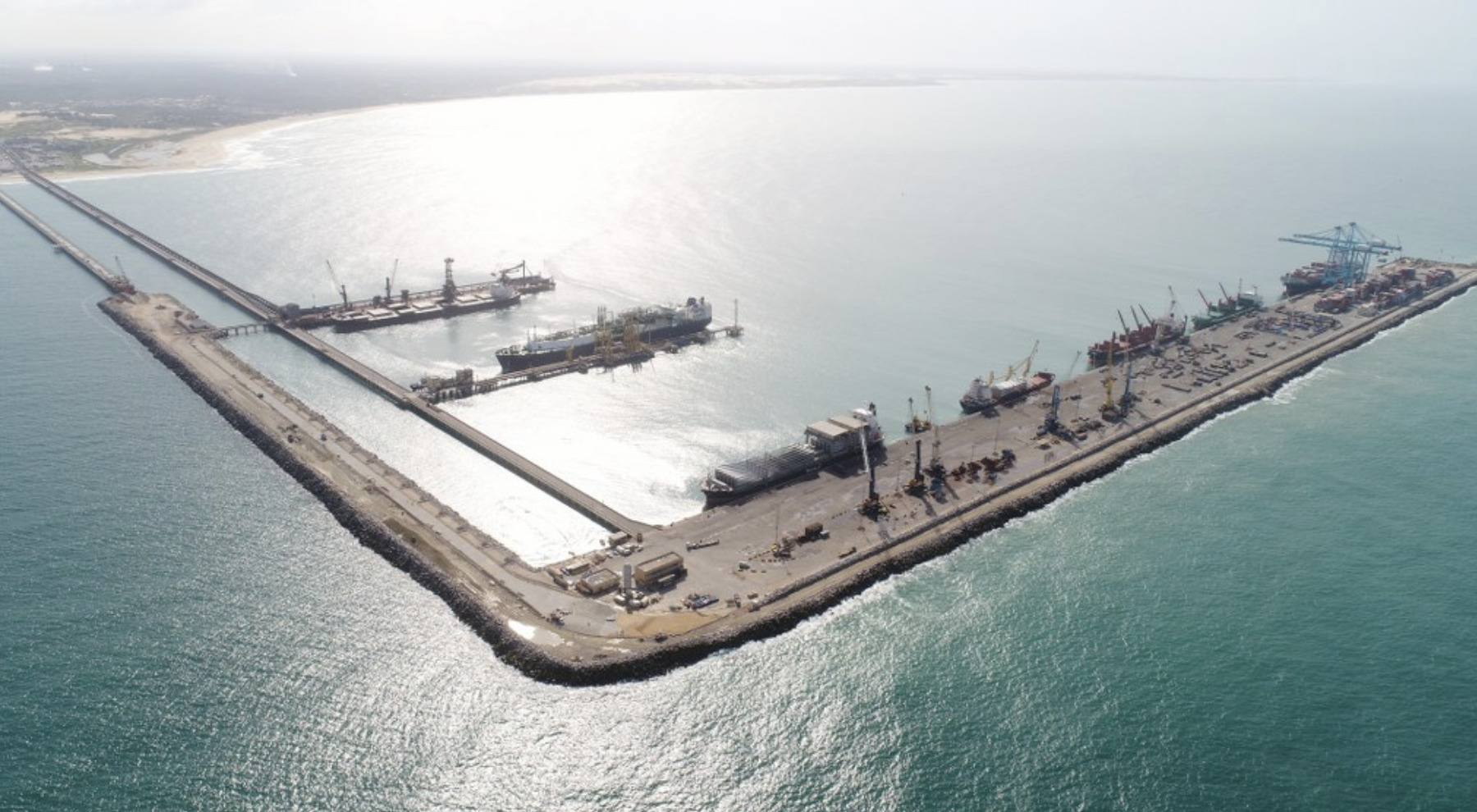
Ceará Establishes Brazil’s First Shore Power System for Vessels
FORTALEZA – The Port of Pecém has achieved a historic milestone in national port infrastructure. In an initiative that reinforces its position as the most sustainable strategic hub in the South Atlantic, the Ceará terminal became the first in Brazil to offer a shore power system (onshore electricity) for ships and cranes.
Construction for this infrastructure was deployed at the Multi-Utility Terminal (TMUT). The project is recognized as one of the leading international trends for the decarbonization of maritime transport, aligning Ceará with global best practices in innovation and clean energy.
Investment and Execution
Driven by a total investment of R$ 13.2 million, the project was executed by the company Grid Power Solutions, with infrastructure works wrapping up in September of 2024. In addition to the vessel-feeding structure, the project included electrical retrofitting for the terminal’s MHC cranes—which previously ran on diesel—accelerating the electrification process of loading and unloading operations.
Environmental Impact and Operational Efficiency
Shore power technology allows berthed vessels to shut down their auxiliary diesel engines and draw power directly from the land-based electrical grid. The positive impacts are multidimensional:
- Emissions Reduction: The measure is estimated to prevent the annual emission of approximately 796 tons of CO2(carbon dioxide).
- Noise Pollution: Turning off ship engines during their stay at the port drastically reduces operational noise.
- Cost Reduction: For shipowners, the system represents savings in operational costs while improving the terminal’s overall logistical efficiency.
Towards a 100% Electric Operation
The implementation of shore power is part of a broader modernization strategy for the Pecém Complex. Currently, about 65% of port operations are already electrified.
This energy transition movement was further strengthened by the arrival, in 2025, of the first four electric trucks from APM Terminals. To support this new fleet and the expansion of the grid, CIPP S.A. invested an additional R$ 500,000 to upgrade the operational area.
A National Benchmark
By pioneering this technology, the Port of Pecém not only boosts its competitiveness against other terminals but also establishes itself as the premier Brazilian benchmark in port sustainability. The project integrates seamlessly into the Green Hydrogen Hub ecosystem, reaffirming Ceará’s commitment to a low-carbon economy and the attraction of international investments that prioritize ESG (Environmental, Social, and Governance) criteria.